
Contents
Short answer: An air-operated double-diaphragm (AODD) pump can stop when discharge resistance balances the force from its compressed-air supply. A closed downstream valve, blocked filter or high backpressure can create this deadhead condition. Do not diagnose a failed air valve from the stall alone. First stop and isolate the system, identify why the discharge pressure rose, and reopen a safe flow path. Restart at a controlled air setting while watching pressure, flow and leaks. Never open a pressurized joint to “test” the blockage.
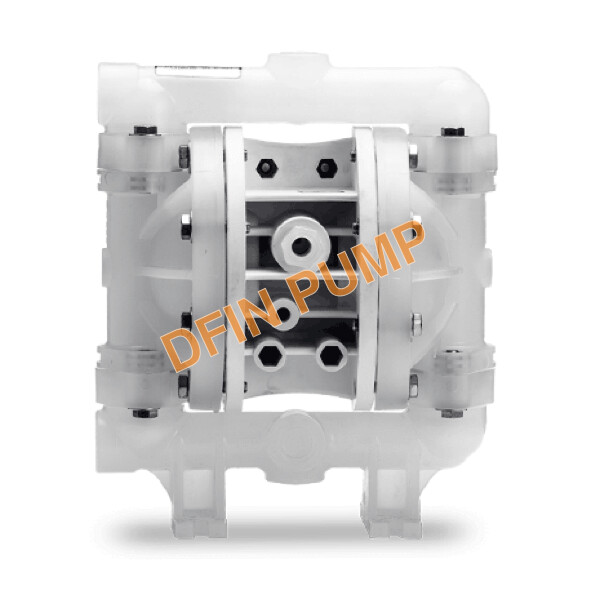
A WILDEN operating manual describes pressure-balanced stopping as a normal characteristic for its specified pump design. That statement does not certify every installation or make trapped liquid, piping and downstream equipment safe. The WILDEN P100 photograph shown with this guide is a real catalog product photo and a representative AODD example, not proof of the installed model or its pressure rating. Use the manual and limits for the exact pump.
What deadhead means in an AODD pump
Deadhead describes a pump facing a discharge path that cannot accept the expected flow. As the liquid-side pressure rises, the diaphragms eventually cannot complete a stroke against the available air pressure and cycling slows or stops. When resistance falls, a correctly functioning pump may begin cycling again if the air supply remains on. This is different from an electrically driven centrifugal pump running continuously with a shut outlet, and different from an internal gear pump that needs engineered overpressure protection.
The pressure comparison must be made at the pump while it is operating. A regulator gauge at the compressor is not a substitute for checking pressure near the air inlet, and a gauge far downstream may miss a blockage between the pump and gauge. Pressure balance is an explanation to test, not a reason to raise air pressure automatically. Review DFIN’s compressed-air supply guide if the supply is uncertain.
Recognize a pressure-balanced stop without overlooking faults
Record whether the pump slowed gradually as a valve closed or stopped abruptly without a process change. Note the air pressure at the pump under load, discharge pressure at a suitable point, valve positions, liquid level, filter condition and whether the exhaust continues to hiss. A stall that repeats at the same downstream restriction suggests a system cause; a pump that will not cycle with an open, proven discharge path needs wider diagnosis.
Swipe the table horizontally to view all columns.
| Observation | First area to check | Safe next step |
|---|---|---|
| Cycling slows as the outlet valve closes | Discharge pressure and valve position | Restore an approved flow path after isolating and assessing trapped pressure |
| Pump stops with valve open and filter differential pressure high | Blocked filter or downstream line | Isolate, depressurize and inspect the restriction by site procedure |
| Pump stalls while air pressure at the pump falls | Air line, regulator, filter or compressor capacity | Measure under-load supply before opening the pump |
| Pump will not restart after the discharge is safely opened | Air valve, exhaust, check valves or other fault | Continue model-specific troubleshooting; do not force a pressure increase |
| Liquid appears at the air exhaust | Possible diaphragm failure and air-side contamination | Stop, isolate and follow the service procedure before any restart |
These observations narrow the investigation; none alone proves that an air kit, wet-end kit or complete pump is required. If the issue looks like an air distribution fault after system checks, use DFIN’s air-kit versus air-valve guide to prepare a model-specific parts enquiry.
Check the discharge system in the right order
Confirm the intended valve and flow path
Verify the valve lineup against the process drawing or approved operating procedure. A hand valve, actuated valve, non-return valve or quick-disconnect can be shut or installed incorrectly. Do not open an unknown outlet into an unsafe vessel or atmosphere. Identify where the liquid would go, whether the receiving tank can accept it, and whether the path includes isolation, backflow or hazardous-fluid controls.
Look for restrictions and pressure held in the line
Filters, strainers, hoses, nozzles, spray devices and long or narrow discharge pipe can build pressure as they foul. A pressurized receiver or static head can also exceed the pump’s available driving differential. If pressure remains trapped after air is shut off, isolate and drain according to site rules before loosening any component. A pressure gauge is useful only when its location and calibration are understood.
Check the air drive only after the process path is known
Compare air inlet pressure while the pump is attempting to run with the actual discharge condition and the pump manual. Inspect the regulator, air filter, supply hose and exhaust muffler for restriction, water or icing. Low dynamic air pressure can make a normal discharge seem like a deadhead. If the discharge is clear but the pump still stalls, investigate the pilot and main air valve, check valves and diaphragms using the exact service manual. Avoid treating a partial pump code or representative photo as a parts specification.
Safe restart checklist after a deadhead event
- Make the area safe. Identify the liquid, exposure hazards and destination. Apply the site’s lockout and pressure-release procedure; isolate air and liquid before any physical inspection.
- Record the state. Photograph the nameplate and valve lineup. Record air and discharge gauge readings, any alarm, the symptom sequence and the last known flow.
- Find the obstruction or high backpressure. Check the receiving tank, valves, filters, hoses and downstream equipment. Do not bypass an interlock or relief device merely to restore flow.
- Restore an approved path. Clear or service the restriction only after pressure is relieved. Confirm the destination is ready and the discharge line is correctly assembled and supported.
- Restart under control. Follow the exact pump and site instructions. Apply air gradually within the documented limits and observe the first strokes from a safe position.
- Verify sustained operation. Record steady flow, air and liquid pressure, cycle behavior, leaks and abnormal noise. Stop if the pump again approaches a pressure-balanced halt or if liquid enters the exhaust.
Leaving the air supply on can allow automatic restart when discharge pressure falls. Where unexpected movement or transfer is hazardous, isolate air as required by the operating procedure rather than relying on a closed liquid valve to keep the pump stopped. The correct shutdown and restart arrangement depends on the installation and controls.
Do you need a new pump, an air kit or a system change?
If flow returns after a known closed valve is safely opened and pressures normalize, the pump may need no repair. Investigate why the valve was closed and whether the control sequence needs correction. If a filter repeatedly blocks, address filtration and maintenance rather than increasing air pressure. If normal operating backpressure is near the pump’s available capability, review the actual duty point, air supply and model selection. DFIN’s AODD sizing guide helps structure that review.
An air kit is a service-parts decision, not a default cure for a pressure-balanced stop. A pump that remains stalled with a verified open discharge may have an air-end, exhaust or wet-end fault. Match any kit to the full model, serial or item number and the manufacturer’s current service information. Compare wetted materials with the real fluid, concentration and temperature before ordering. Browse DFIN’s pump catalog and parts catalog as starting points, then confirm the actual configuration.
What to include in a procurement or service RFQ
Send the complete pump nameplate and configuration code; a clear photo of the installed pump; fluid and concentration; temperature, viscosity and solids; required flow and discharge pressure; suction condition; available air pressure measured at the pump; discharge route, valve and filter details; gauge locations; and the observed stall and restart sequence. State whether you seek a troubleshooting review, compatible service kit, replacement pump or system redesign. These data let a supplier separate pump capability from a blocked process path. Price depends on the confirmed configuration, material, parts scope and quantity; request a configuration-specific quote through DFIN’s RFQ page.
FAQ
Does deadheading damage an AODD pump?
Many AODD designs can stop when discharge pressure balances the air drive, and a WILDEN manual describes this for its specified model. Check the exact pump manual and installation. Trapped pressure and unexpected automatic restart remain system hazards even if the pump itself can tolerate a pressure-balanced stop.
Should I increase air pressure to make the pump restart?
Not as a first response. Increased air pressure may push against an unsafe blockage or exceed a component limit. Identify the discharge condition and measure the dynamic air supply first; then operate only within the exact model’s published limits.
Why does the pump restart when the discharge valve opens?
Opening a safe flow path can lower liquid-side resistance below the available air-drive force, allowing the diaphragms to stroke again. An automatic restart is expected on some installations and must be considered in the shutdown procedure.
What if the pump still will not cycle with the outlet open?
Verify that the path is genuinely clear, that air pressure reaches the pump under load, and that the exhaust is unobstructed. Then follow the exact model’s troubleshooting procedure for air-valve, pilot, check-valve and diaphragm faults before buying parts.