
Contents
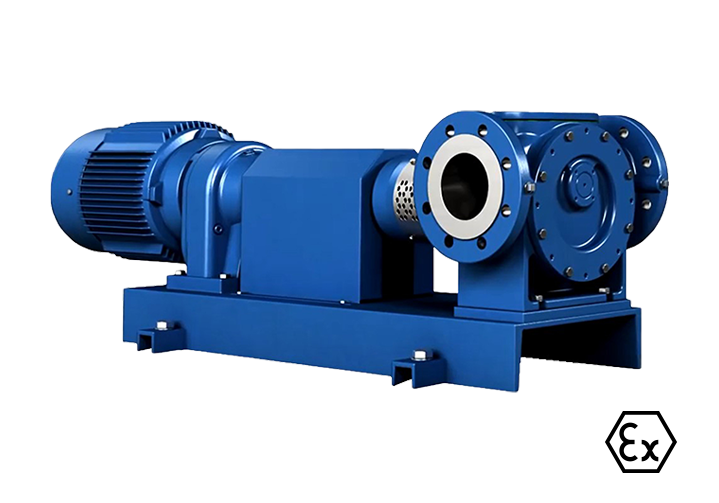
A ROTAN internal gear pump can pump in either direction, but reversing shaft rotation reverses which port is suction and which is discharge. Before changing motor direction or restarting after electrical work, identify the actual shaft-end view, trace both pipe runs and confirm the relief arrangement for the new flow direction. Do not assume the original discharge protection still protects the system after reversal.
DESMI explains that, when viewed from the pump shaft end, clockwise rotation moves liquid from right to left; counterclockwise rotation moves it from left to right. That is a viewing convention, not a license to reverse an installed unit without checking the specific assembly. The photograph shows a representative ROTAN HD product family pump, not the exact configuration or piping in your plant.
What changes when a ROTAN pump runs in reverse?
ROTAN is an internal gear, positive-displacement pump. The direction of the drive determines which side fills and which side discharges. Reversing rotation can therefore be useful in a system deliberately designed for two-way transfer. In a conventional one-way installation, however, the same change can put suction on a line designed as discharge, send liquid toward the wrong vessel, or load a line that lacks appropriate pressure protection.
The pump’s ability to move liquid both ways does not mean every connected component is bidirectional. Check valves, strainers, filters, flow meters, heat exchangers, hoses, tank connections and instruments may have a required flow direction or pressure rating. Review the entire liquid path, not merely the pump casing. If the pump is unexpectedly delivering in the wrong direction after motor rewiring or service, stop and investigate rather than running longer to see whether it primes.
How to identify the suction and discharge ports
Start from the correct viewing end
Record the direction of the pump shaft as viewed from the shaft end, and identify the physical right and left ports from that same viewpoint. Do not copy a clockwise arrow from a sketch viewed from the opposite end. A motor fan view can invert the visual impression. The motor and pump may also be assembled in ways that make a photograph an unreliable guide. Use the nameplate, arrangement drawing and current manual for the actual unit.
Trace the complete connected flow path
Mark the source vessel, isolation valves, suction strainer, pump ports, discharge instruments, downstream isolation and destination. Compare the desired transfer direction with the shaft-end convention. Then check actual valve positions and piping tags on site. If a line is empty or cannot be opened safely, do not infer its function from pressure alone. For low or absent delivery, also use the ROTAN suction troubleshooting guide to distinguish wrong rotation from inadequate inlet feed.
For a newly wired three-phase drive, a qualified electrician should verify the electrical direction using the permitted commissioning method. Operators should not change wiring or jog a dry or blocked pump merely to test an assumption. Confirm the drive train, coupling guards, pump wetting and permitted starting conditions in the model-specific instructions.
Why the relief valve needs a separate check
A positive-displacement pump can build pressure quickly against a blocked outlet. DESMI’s ROTAN guidance says that, where the pump has a relief valve, the spring-containing side must face the suction side. Reversing the pumping direction without reviewing this orientation can leave the valve acting in the wrong direction. The pump’s own bypass also does not replace a system pressure-relief design for every trapped section of pipework.
Identify whether the installed pump has an integral relief valve, where its spring housing is, where bypassed liquid returns and what other pressure protection exists. Some systems need a separate relief route or a different valve configuration for reversible service. The exact solution depends on the pump build and piping scheme. Review the ROTAN bypass and system relief guide before approving a change. Never alter a relief setting or turn a valve body by guesswork; use the applicable manual and qualified service procedure.
Diagnose unexpected reverse flow without damaging the system
Swipe the table horizontally to view all columns.
| Observation | Likely question | Safe next check |
|---|---|---|
| Flow heads toward the source vessel after electrical work | Did shaft rotation change? | Stop, isolate and compare verified shaft-end rotation with the required port direction. |
| Motor runs but the intended outlet has no flow | Is the intended outlet now the suction side? | Trace both ports and valves; then check inlet supply, prime and coupling before restart. |
| Pressure rises rapidly with little transfer | Is the new outlet closed or the relief path unsuitable? | Stop promptly; inspect downstream isolation and protection under plant procedure. |
| Noise or unstable flow remains after direction is corrected | Is the inlet starved or liquid too viscous at startup? | Check tank level, line restriction, temperature and the selected operating point. |
These observations are clues, not a remote diagnosis. Wrong rotation, an empty suction line, a shut valve, a blocked strainer, worn internals or a disengaged drive can produce overlapping symptoms. Do not keep cycling a positive-displacement pump with uncertain flow just to gather more symptoms. Record the last successful operating state and any changes to wiring, drive settings, maintenance or pipework.
Controlled reversal and restart checklist
- Stop and make safe. Apply the site’s lockout, depressurization, draining and hazardous-liquid controls before opening or adjusting any component.
- Identify the exact pump. Record the full ROTAN type, serial or configuration code, drive details, existing flow arrow and current service manual.
- Draw both flow routes. Trace the source, destination, all valves, check valves, filters, instruments and any line that could be trapped or pressurized in either direction.
- Verify rotation and relief. Confirm shaft-end direction, port assignment, spring-side orientation if an integral valve is fitted, and suitable system protection.
- Check the liquid and drive. Confirm compatible wetted materials, actual temperature and viscosity, inlet feed, priming, coupling condition, motor loading and safe speed for the intended duty.
- Commission under supervision. A qualified team should follow the model-specific manual, start with the planned path open, watch inlet and outlet conditions, and stop immediately for abnormal pressure, noise, temperature or leakage.
The general ROTAN start-up checklist covers alignment, priming and monitoring in more detail. A planned two-way service requires engineering review before installation; a one-time reversal to clear a blockage is not a substitute for cleaning or repair.
What to include in a configuration or parts enquiry
Send the complete nameplate and pump code, a photo of both ports and the relief housing, an arrangement or P&ID, the intended flow direction in each operating mode, and the motor or gearbox data. Add the liquid composition, temperature range, viscosity at start and normal running temperature, required flow, differential pressure, inlet conditions and any solids. State whether the pump already has an integral bypass and whether reversible duty is new or part of the original design.
For an installed unit, identify the symptoms and the exact change that preceded them. For a new purchase, ask for an approved pump, drive, relief and piping arrangement rather than a pump body alone. A family photo cannot establish the valve, seal or port execution. Compare the DFIN DESMI ROTAN family information and submit the details through the DFIN RFQ page. Price and lead time depend on the confirmed configuration, quantity, documentation and delivery terms; request a specific quotation.
FAQ
Can every ROTAN pump transfer in both directions?
DESMI states that ROTAN pumps can pump in either direction. The installed system may not be suitable for reversal. Confirm the exact pump configuration, relief orientation, seal arrangement, motor and all connected piping before using that capability.
Which port is suction when the shaft turns clockwise?
Viewed from the pump shaft end, DESMI’s general convention is clockwise rotation for flow from right to left. In that view, the right port is suction and the left port is discharge. Verify the viewpoint and installed drawing before marking ports or changing operation.
Can I reverse a three-phase motor to fix no flow?
Only after diagnosis and an electrical and mechanical review. A qualified electrician can correct an unintended motor rotation using the approved procedure. First confirm the real flow path and relief design; no flow can also come from poor suction, a shut valve, lost prime or drive failure.
Does the pump bypass protect a reversed installation automatically?
No automatic assumption is safe. Where a ROTAN relief valve is fitted, its spring-containing side must be on the suction side for the intended pumping direction. The system may need independent relief protection as well. Confirm both before operation.