
Contents
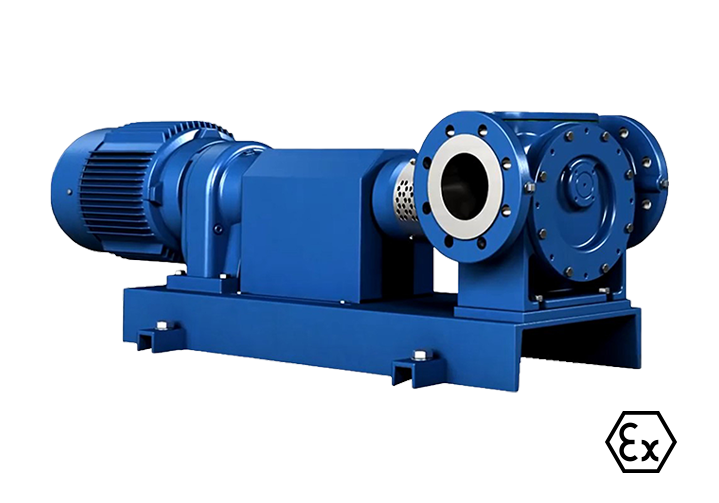
Short answer: If a DESMI ROTAN HD internal gear pump delivers less flow than it used to, axial clearance deserves inspection only after inlet conditions, liquid viscosity, speed, discharge pressure and bypass operation have been checked. The clearance is the gap between the rotor and idler faces and the front cover. Wear can enlarge that gap and increase internal slip, especially with a thinner liquid or higher differential pressure. A tight gap can cause rubbing as the pump heats. Do not turn an adjustment screw to compensate for an unknown fault: identify the exact build and use its applicable DESMI service instructions.
What axial clearance does in a ROTAN HD pump
An internal gear pump moves liquid in spaces formed by its rotor, idler and casing. The front cover closes one side of those spaces. Axial clearance is the running gap between the rotating faces and that cover. It allows rotation without contact while limiting liquid recirculation inside the pump. The factory sets it for the supplied configuration. A later service adjustment may be necessary after repair or wear, but the correct method and setting depend on the particular pump.
On a worn pump, a larger gap provides another route for liquid to slip from the high-pressure side toward the low-pressure side. The effect can become more apparent as viscosity decreases or differential pressure rises. This is a diagnostic relationship, not a promise that every low-flow HD pump needs a clearance adjustment. Suction starvation, a relief valve passing, wrong speed and measurement errors can look similar. Conversely, reducing a gap too far can create contact, heat and damage when parts expand in service.
Recognize the symptom pattern before opening the pump
Record a baseline at a stable operating point. Measure actual flow, suction and discharge pressure at known gauge locations, shaft or motor speed, motor current, liquid temperature and product identity. Compare these with the original duty and any earlier trend at the same conditions. A change in liquid temperature can change viscosity enough to alter both suction performance and internal slip. The trend is more useful than one isolated pressure reading.
Swipe the table horizontally to view all columns.
| Observation | First check | Why it matters |
|---|---|---|
| Low flow with noisy inlet or fluctuating suction pressure | Tank level, inlet strainer, suction valves, air leaks and liquid temperature | Inlet restriction or vapor formation may mimic wear and can damage the pump. |
| Low flow that worsens as differential pressure increases | Bypass or relief path, actual speed, then internal wear | Both external recirculation and internal slip can rise under load. |
| Heat, scraping noise or high current after service | Stop and check for contact, alignment and service settings | Too little clearance or another assembly fault can cause rubbing. |
| Flow changes after product or temperature change | Actual viscosity and suction conditions | A changed duty may explain the result without a defective pump. |
For inlet noise and loss of prime, use the related ROTAN cavitation diagnosis. Confirm the pump is not running dry or against a closed line while gathering data. Follow site isolation rules and the manufacturer manual for the installed model.
Inspect safely and distinguish adjustment from part replacement
Stop the drive, isolate its energy sources, prevent unintended restart, depressurize and drain the system, and manage hot or hazardous liquid before inspection. Use the equipment-specific maintenance procedure. The DESMI ROTAN manual defines axial clearance between the rotor or idler and front cover, describes measurement with a suitable feeler gauge, and explains that settings vary with type and construction. It does not make one universal field value appropriate for every HD unit.
- Identify the unit. Record the full nameplate code, size, serial information and any special materials, seals, bearing or heating arrangement. A family label such as HD is insufficient for a parts or clearance decision.
- Inspect evidence. Look for scoring on the front cover and rotating faces, foreign particles, abnormal bearing play and seal damage. Photograph both the damage and nameplate before cleaning. Check whether rubbing is localized or widespread.
- Measure as specified. Use the current service procedure for that build and a suitable calibrated gauge. Record actual measured gaps and where they were taken. Do not infer the correct setting from another pump size or a web summary.
- Decide whether adjustment is enough. If faces are sound and the manual permits adjustment, a qualified technician can reset clearance and verify free rotation. If surfaces are scored, bearings are loose or the rotor and idler are damaged, adjusting the cover alone may hide a larger defect. Seek a matched repair plan.
- Recheck the duty. After approved service, verify free rotation, seal condition, correct rotation and protection before start. Compare flow, differential pressure, current and temperature with the recorded baseline at a stable duty.
Do not copy a clearance number from a different ROTAN document. DESMI publishes separate instructions for general ROTAN pumps and certain CHD constructions; size, material and configuration matter. A technician should confirm the applicable revision before adjusting the installed HD pump. If the pump has repeatedly worn its faces, investigate the cause, including solids, poor inlet conditions, thermal effects and incorrect operation, before replacing parts.
Repair, replace or review the operating duty?
An adjustment is a service action, not a substitute for worn hardware. If surfaces and bearings are serviceable, the cause of drift is understood and the applicable manual allows a reset, a controlled adjustment may be reasonable. If the front cover, rotor, idler or bearings are damaged, ask for a condition-based parts review. Where the liquid, temperature, pressure or required flow has changed, a new duty review may be more useful than returning the pump to an old setting.
Check the DFIN DESMI ROTAN range for family context. Listed products or photographs do not confirm interchangeability with an installed pump. The full build code and duty determine a replacement configuration. Price depends on the verified components, materials, seal and service scope; request a quotation rather than assuming a generic part price.
Selection and parts checklist for an RFQ
- Full pump nameplate code, serial information and clear photos of the pump, drive and any heating or relief arrangement.
- Liquid name, temperature range, viscosity at operating and startup temperatures, solids and any cleaning fluids.
- Required and measured flow, suction and discharge pressure, speed, motor current and normal operating hours.
- Inlet piping, strainer, tank level, discharge restriction and bypass or relief-valve arrangement.
- Measured clearance, measurement method, photos of cover, rotor, idler and bearings, and prior repair history.
- Required scope: inspection advice, matched wear parts, a complete pump or application review; include the desired documentation and delivery destination.
Send the evidence through the DFIN RFQ form. If the main issue is a leaking shaft seal, first review the separate ROTAN seal diagnosis; the seal and axial clearance are different service decisions.
Frequently asked questions
Does low flow prove that axial clearance is excessive?
No. A blocked inlet, vapor or air entering the suction line, changed viscosity, low speed, a passing bypass and inaccurate flow measurement can all reduce delivered flow. Establish the duty and rule out external causes before opening the pump.
Can I tighten the front cover until flow improves?
No. An arbitrary adjustment can produce contact when the pump heats and can damage rotating parts. Identify the exact configuration and follow the matching manufacturer procedure, including measurement and free-rotation checks.
Should I replace the rotor and idler whenever clearance has increased?
Not automatically. The condition of the cover, gears, bearings and liquid duty determines the repair scope. Photograph and measure the parts, then match any replacement to the full pump code and service documentation.
What information is needed to quote a replacement ROTAN HD pump?
Provide the complete code and serial details, liquid properties at both startup and operation, flow, pressures, temperature, speed, sealing and material requirements, and photos of the installation. This allows a configuration and duty review before pricing.