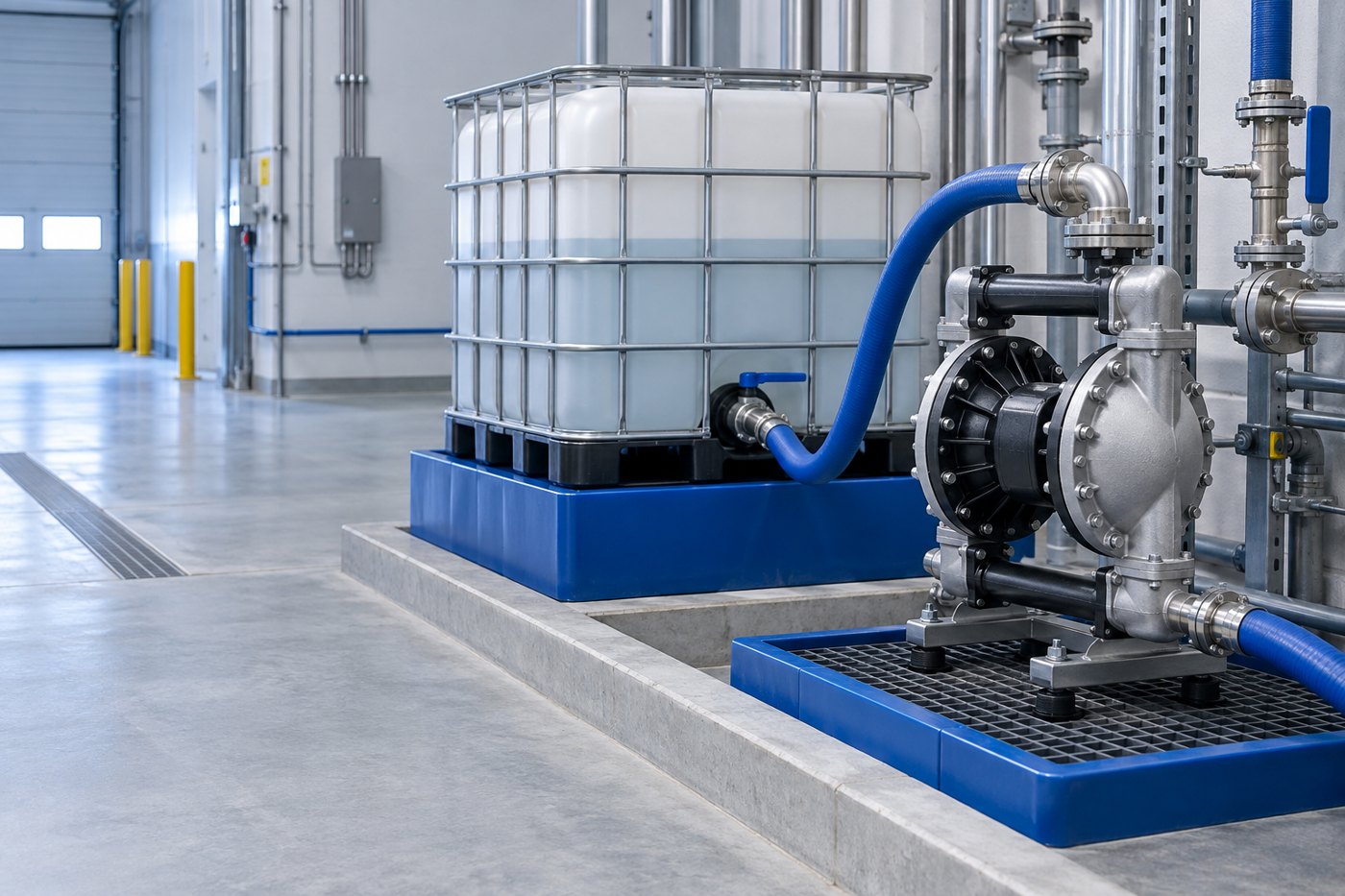
The right WILDEN air-operated double-diaphragm (AODD) pump is selected from the actual chemical, operating point and installation—not from port size or maximum flow alone. Confirm every wetted material, calculate the required flow and total discharge pressure, then check suction conditions, solids, air demand and maintenance access before requesting a quotation.
1. Define the chemical transfer duty
Begin with one written duty sheet. A supplier cannot make a dependable selection from the chemical name alone because concentration and temperature can change material compatibility, while viscosity and solids can change pump capacity.
- Fluid name, concentration, temperature and specific gravity
- Viscosity at the actual pumping temperature
- Solids concentration, maximum particle size and abrasiveness
- Required normal and peak flow
- Suction lift or flooded suction, pipe length and elevation
- Total discharge pressure, including static head and line losses
- Continuous or intermittent operating hours
2. Verify every wetted material
Check the pump body, diaphragms, balls, seats, O-rings and any other part that contacts the liquid. Common body options include polypropylene, PVDF, aluminum, cast iron and stainless steel; common diaphragm choices include PTFE and several elastomers. These examples are not universal recommendations.
Use current manufacturer compatibility information and confirm the exact concentration and temperature. Also consider permeation, swelling, abrasion and whether mixed or contaminated fluids may be present. When service is critical, request written compatibility confirmation from the chemical and pump suppliers.
3. Match flow and pressure at the real operating point
Use the performance curve for the exact pump size and configuration. Plot the required flow against the calculated discharge pressure, then read the corresponding inlet-air pressure and air consumption. Leave a practical operating margin without selecting a pump so large that it must run inefficiently at the bottom of its range.
Maximum advertised flow is normally measured under favorable test conditions. Viscosity, suction lift, restrictive piping, check-valve materials and solids can reduce delivered flow. Ask for a corrected performance review when these factors are significant.
4. Evaluate solids and shear sensitivity
AODD pumps can handle suspended solids, but allowable particle size depends on the pump and valve design. Fibrous material may behave differently from round particles. For settling solids, plan flushing and draining. For shear-sensitive products, control cycling speed and review the effect of valves and piping.
5. Check suction conditions and piping
Keep the suction line short and generously sized, minimize elbows, and eliminate air leaks. High viscosity and suction lift require special attention. Confirm that the pump can be primed under the real conditions and that flexible connections, pulsation control, grounding and containment meet site requirements.
6. Confirm compressed-air capacity
The air system must supply both pressure and volume at the pump while other pneumatic equipment is running. Check compressor delivered-air capacity, receiver size, header and hose bore, regulator and filter flow ratings, fittings and dynamic pressure drop. An adequate static gauge reading does not prove that enough air reaches the pump during operation.
7. Plan maintenance and total ownership cost
Purchase price is only one part of the decision. Compare compressed-air use at the same liquid duty, expected diaphragm and valve life, repair-kit availability, maintenance time and production risk. Efficient operation at a moderate cycle rate often matters more than the lowest initial quotation.
| Selection item | Why it matters | Evidence to request |
|---|---|---|
| Wetted materials | Prevents corrosion, swelling and contamination | Complete material code and compatibility review |
| Operating point | Confirms achievable flow and air demand | Exact performance curve with duty marked |
| Solids handling | Reduces clogging and valve damage | Permitted solids size and valve configuration |
| Air system | Prevents slow or unstable cycling | Air pressure and consumption at duty |
| Service parts | Controls downtime and lifecycle cost | Correct wet-side and air-side kit numbers |
Information to include in your RFQ
Send the fluid data, required operating point, suction arrangement, pipe and connection details, air supply, operating schedule, hazardous-area requirements and a clear photo of any existing nameplate. If replacing a pump, include the complete item number rather than only the series name.
Frequently asked questions
Can I choose an AODD pump from connection size?
No. Connection size does not confirm chemical compatibility, capacity, air consumption or solids handling. Use the exact duty and performance curve.
Is PTFE always the best diaphragm for chemicals?
No. PTFE offers broad compatibility, but flex life, abrasion, temperature, suction performance and backup construction also matter. Confirm the complete diaphragm arrangement for the service.
How much does a WILDEN AODD pump cost?
Price depends on size, body and elastomer materials, air system, connections, certification and accessories. A reliable quotation requires the full duty; publishing a generic price can be misleading.
Related DFIN resources
- Browse complete AODD pumps
- Browse diaphragms, valves and repair kits
- Size compressed-air supply for an AODD pump
- Request application and quotation support
Application guidance only. Confirm the selected pump, materials, operating limits and installation requirements against current manufacturer documentation before ordering.