If an air-operated double-diaphragm (AODD) pump cycles but will not prime or delivers less liquid than expected, inspect the suction line and the check valve balls and seats before ordering parts. A ball that cannot seal against its seat lets liquid move backward during a stroke. The correct replacement depends on the complete pump code, the original parts drawing, fluid compatibility and the condition of both mating surfaces.
What do the ball and seat do?
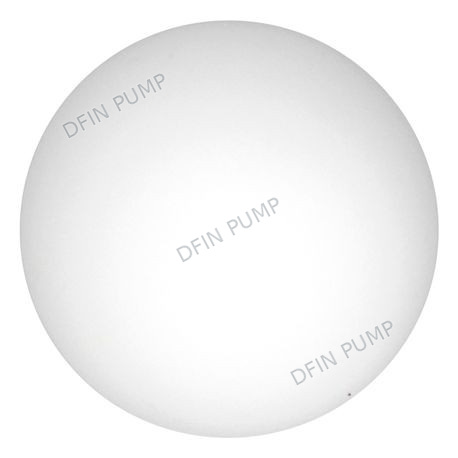
In a ball-check AODD design, inlet and outlet balls alternately lift and seal against their seats to direct liquid through the pump. The exact number, layout and materials vary by model. A damaged ball, worn seat or trapped particle can reduce the seal and weaken priming. Other causes, including an empty tank, suction air leak, blocked strainer, excessive suction lift, damaged diaphragm or inadequate air supply, must also be checked.
Symptoms and first checks
| Observed symptom | Check before replacing parts | If the check valve is at fault |
|---|---|---|
| Pump cycles, but little or no liquid leaves the outlet | Confirm liquid supply, open valves, suction airtightness and the discharge path. | Look for a stuck ball, debris between ball and seat, or incorrect assembly. |
| Pump primes slowly or loses prime | Check suction lift and line leaks against the pump manual. | Inspect both mating surfaces for nicks, swelling, flat spots and seat wear. |
| Flow falls after a product or duty change | Review viscosity, solids, temperature and air supply. | Recheck wetted-material compatibility and whether deposits restrict ball movement. |
How to inspect safely
- Stop the pump, isolate the compressed air, relieve fluid pressure and drain or contain the liquid according to the site procedure and the exact manufacturer manual.
- Record the pump nameplate, full model code, current ball and seat part numbers, material codes and orientation before disassembly. Take clear photos.
- Remove the manifolds and check components only in the sequence specified for that model. Inspect the ball, seat, seat seal and cage or guide together; clean removable deposits without damaging sealing faces.
- Replace components showing cuts, distortion, swelling, embedded abrasive, cracks or damaged seating faces. Use the manual for part count, orientation and tightening procedure; do not guess from a similar-looking pump.
- Reassemble, check for leaks and verify priming and flow under controlled conditions. If the fault remains, continue the suction, diaphragm and air-system diagnosis.
Match the replacement to the duty
Check chemical compatibility for every wetted part at the actual concentration and temperature, then consider solids, abrasion and the required suction arrangement. Ball weight, hardness and seat pairing can affect closing behavior and wear, but no material is universally best. Do not assume that two parts with the same apparent diameter or the same material will fit the same pump. Use the manufacturer’s current exploded drawing and part-number revision to confirm the combination.
RFQ checklist for balls and seats
- Pump brand, full model or serial information and a photo of the nameplate
- Original ball, seat and seal part numbers or a marked parts drawing
- Liquid name, concentration, temperature, viscosity and any solids or cleaning chemicals
- Observed fault, required quantity, current material and desired delivery destination
Frequently asked questions
Should I replace only the ball?
Inspect the seat and its seal at the same time. A new ball may still leak on a scored or distorted seat. The replacement scope should follow the condition of all parts and the model-specific manual.
Does poor priming always mean worn check valves?
No. An air leak on the suction side, excessive suction lift, a blocked inlet, an empty supply or an unsuitable duty can produce similar symptoms. Work through the system checks before dismantling.
Can I choose PTFE or polyurethane from the material name alone?
No. First confirm the exact pump configuration and the liquid at operating temperature, then verify the approved ball, seat and seal combination in the manufacturer documentation.
What affects the replacement price?
Part number, material, quantity, kit versus individual components and delivery requirements affect a quote. Send the RFQ details for a compatible offer.
For part identification, browse the catalog, review the listed examples and send the complete pump code and duty data for a compatibility check: Browse DFIN’s valve-ball and valve-seat parts; see a listed WILDEN PTFE valve ball; see a listed WILDEN polyurethane valve seat; send an RFQ; compare WILDEN air and wet repair kits.