Quick answer: choose a Flygt N-pump from the required duty point first, then verify solids and fibre content, installation arrangement, impeller configuration, material, motor supply and control method. The model number alone is not enough. For a reliable 3069, 3085, 3102 or 3127 selection, send the design flow, total dynamic head, liquid description, maximum solids size, temperature, power supply and wet-well details with your enquiry.
Selection principle: the best wastewater pump is the smallest correctly configured unit that meets the real operating point without chronic clogging, excessive starts, unstable operation or unnecessary energy use.
Why the Flygt model number is only the starting point
Engineers often search for “Flygt 3069 vs 3085”, “Flygt 3102 pump selection” or “Flygt 3127 specifications”. Those searches are useful for building a shortlist, but every model family can include different motors, impellers, discharge sizes, installations and material options. Two pumps carrying the same basic model number may therefore suit very different duties.
A complete selection must match the hydraulic curve and the exact configuration. Never approve a replacement from the nameplate model alone when the impeller code, motor rating, frequency, voltage or installation type is uncertain.
How Flygt N-technology helps with fibrous wastewater
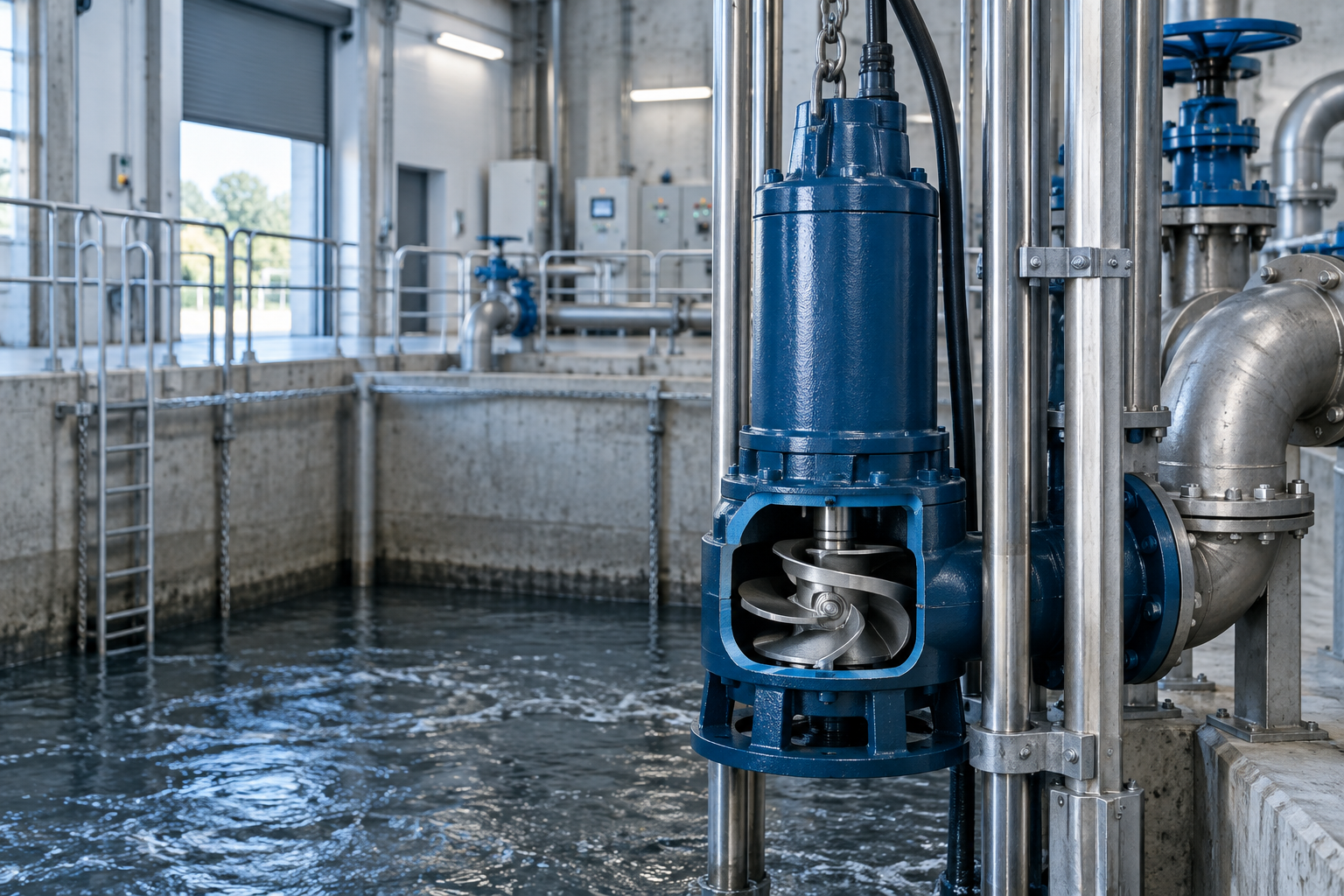
Flygt N-technology uses a self-cleaning, semi-open impeller together with a relief groove in the volute. As the impeller rotates, many stringy or fibrous contaminants are guided toward the impeller edge and moved through the pump instead of accumulating at the inlet.
This design is intended to reduce clogging and help the pump maintain hydraulic efficiency in wastewater containing rags, wipes and similar material. It does not remove the need to check solids size, rag loading, grit, operating range or wet-well design. Extremely abrasive, dense or unusual media may require another impeller or material solution.
3069, 3085, 3102 or 3127: how to build a shortlist
| Model family | Typical shortlist position | What must be confirmed |
|---|---|---|
| Flygt 3069 | Compact wastewater duties and smaller stations | Duty point, passage, discharge, motor and installation |
| Flygt 3085 | Small-to-medium municipal or industrial transfer duties | System curve, fibre loading, impeller and start frequency |
| Flygt 3102 | Medium wastewater duties needing more hydraulic capacity | Exact curve, motor power, solids and installation arrangement |
| Flygt 3127 | Low-to-medium flow applications requiring a broad configuration range | Selected curve, discharge size, impeller, material and cooling |
This table is a purchasing guide, not a performance guarantee. Xylem publishes model-specific curves and configuration data; the final selection should be checked against the current manufacturer data for the proposed unit.
Step 1: calculate the real duty point
The duty point is the intersection of the pump curve and the system curve. Provide both the required flow and total dynamic head. Total dynamic head includes static lift plus friction losses through pipe, valves and fittings at the design flow.
- Flow: normal, minimum and peak inflow, stated in m³/h, L/s or gpm.
- Static head: the vertical level difference between suction and discharge.
- Friction loss: calculated for the actual pipe diameter, length and fittings.
- Operating range: consider minimum and maximum wet-well levels, not one ideal point.
Oversizing can be as troublesome as undersizing. A pump that is too large may run for very short periods, start too frequently, create high velocity in the force main or operate away from its preferred range.
Step 2: describe solids, fibres and abrasives
“Wastewater” is not a complete liquid description. Domestic sewage, food waste, sludge, oily water and industrial effluent can have very different handling requirements.
- State the largest expected solid and whether it is hard, soft or deformable.
- Describe the amount of wipes, cloth, hair, rope or other long fibres.
- Report grit, sand or mineral content that may accelerate wear.
- Include dry-solids percentage, viscosity and tendency to settle when relevant.
- Identify chemicals, chlorides or pH extremes that affect elastomers and metals.
The free passage stated for a configuration is important, but passage diameter alone does not predict resistance to ragging. Impeller geometry, inlet conditions and wet-well operation also matter.
Step 3: choose wet or dry installation
Wet installation
A guide-rail arrangement can simplify removal of a submerged pump without personnel entering the wet well. Confirm discharge connection dimensions, lifting arrangement, cable length, minimum submergence and whether the motor can remain adequately cooled at the lowest operating level.
Dry installation
A dry-installed pump offers easier inspection, but cooling, piping support, inlet conditions and seal-leak management require attention. Do not assume that every motor or cooling arrangement can be used in every dry installation.
Step 4: verify materials and wear conditions
Grey iron configurations are widely used in typical wastewater service. More abrasive duties may justify wear-resistant options such as Hard-Iron components where available. Corrosive industrial effluent can require a different metal, coating, seal face or elastomer combination.
Material decisions should be based on the complete liquid composition and temperature. A corrosion-resistant metal does not automatically make every seal and elastomer chemically compatible.
Step 5: match motor, power supply and controls
Provide voltage, phase and frequency, plus the available starting method. Direct-on-line, star-delta, soft starter and variable-frequency drive arrangements can impose different electrical and mechanical requirements.
Also state the planned starts per hour, cable length, control-panel location and required protection devices. Level control should prevent excessive cycling and avoid operation below the permitted level. For hazardous areas, the exact approved pump configuration and local electrical rules must be verified; never infer explosion protection from the model family name.
Replacement pump: details that prevent a wrong order
For a like-for-like replacement, send clear photographs of the complete nameplate and the existing installation. Record the full product number, serial number, motor data, impeller code, discharge connection and cable entry. Measure the guide-rail and base connection when the original documentation is unavailable.
If clogging or wear caused the replacement, explain the failure rather than requesting the same configuration automatically. A change in impeller, material, control logic or wet-well operation may offer a better lifecycle result.
What determines Flygt N-pump price?
Price depends on the exact hydraulic configuration, motor rating, voltage and frequency, impeller, material, seals, cable length, installation accessories, controls, certification requirements and delivery destination. A bare pump price cannot be compared fairly with a package that includes a discharge connection, guide system, lifting chain, level devices or control panel.
For an accurate quotation, compare the same scope and ask suppliers to identify exclusions. DFIN does not publish an invented universal price because the configuration changes the cost and suitability.
RFQ checklist for a faster, more accurate selection
- Required flow, normal flow and peak flow
- Total dynamic head or enough system data to calculate it
- Liquid name, temperature, pH, density and viscosity
- Maximum solids size, fibre content and abrasive content
- Wet or dry installation and existing connection details
- Voltage, phase, frequency and preferred starting method
- Hazardous-area classification, if applicable
- Required accessories, controls, quantity and delivery country
- Existing pump nameplate and failure history for replacements
Explore DFIN’s Flygt pump and spare-parts range, then send your operating data and enquiry. Our team can use the duty information to narrow the suitable model and configuration.
Frequently asked questions
Is a larger Flygt N-pump always safer?
No. A larger pump may create short cycling, high velocity, poor efficiency or operation outside the intended range. Size the pump from the system curve and peak inflow, while checking minimum-flow operation.
Can I replace a Flygt 3085 with a 3102?
Not from the model numbers alone. Compare the selected curves, motor supply, discharge connection, guide system, dimensions, controls and operating range. Installation changes may be required.
Does N-technology mean the pump can never clog?
No wastewater pump is immune to every contaminant. N-technology is designed to pass many troublesome solids and fibres, but unusual debris, incorrect operation or poor wet-well design can still cause blockage.
What information is most important for a quotation?
The duty point, liquid and solids description, installation type, electrical supply and exact scope are the essentials. For a replacement, the complete nameplate and installation photos greatly reduce identification risk.
Final selection recommendation
Use 3069, 3085, 3102 and 3127 as a model-family shortlist, not as the final specification. The purchase order should identify the exact configured pump and accessories after hydraulic, solids-handling, material, installation and electrical checks. That disciplined process improves reliability and makes quotations genuinely comparable.