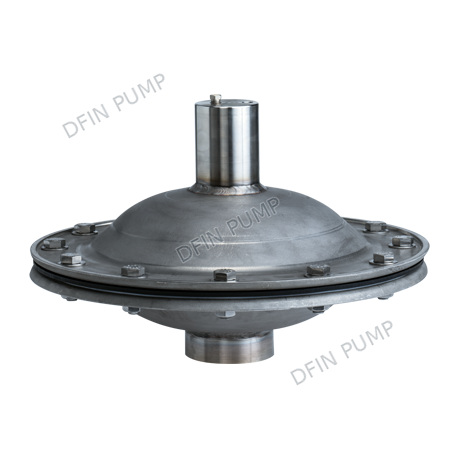
An AODD pump pulsation dampener is useful when the pump’s intermittent discharge causes pressure swings, pipe vibration, unstable flow-meter readings or filling variation. Choose it from the actual pump and liquid duty, then verify connection, wetted materials, pressure rating and the maker’s installation instructions. A dampener smooths discharge pulses; it is not a substitute for a pressure-relief device or a remedy for a starved pump.
When is a dampener worth adding?
- Consider one when a flow meter, filter or other sensitive instrument sits downstream of the pump.
- Investigate visible pipe movement, water hammer at fast valves, splashing during filling or unacceptable pressure variation.
- First check pipe support, valve operation and pump speed. A dampener cannot correct poor suction or an undersized air supply.
Integrated or inline: which arrangement fits?
| Integrated | Inline |
|---|---|
| An integrated unit mounts on a compatible pump manifold. Confirm the exact pump series, manifold port, thread and assembly drawing before ordering. | An inline or tee-mounted unit connects to the discharge piping near the pump. Check available space, connection size, orientation, isolation and service access. |
How to select and install it
- Record normal and peak flow, pump model, stroke rate if known, discharge pressure range and the required degree of flow smoothing. Do not size from pipe diameter alone.
- Check liquid composition, concentration, temperature, solids and cleaning chemicals against every wetted component, including the dampener diaphragm.
- Compare the proposed unit’s pressure and temperature limits with the whole system. Use the manufacturer’s instructions for air connection, charge setting and startup; no single preset suits every duty.
- Place the unit at the manufacturer-approved discharge location, support the piping, provide safe isolation and depressurize and drain before maintenance. Keep any required pressure-relief protection.
RFQ checklist for a compatible dampener
- Pump brand, complete model code and existing manifold or port drawing
- Liquid, concentration, temperature, viscosity and solids
- Flow range, discharge pressure range and observed pulsation problem
- Pipe connection, installation space, materials and area requirements
- Photos or part number of any existing dampener
Frequently asked questions
Can a dampener increase pump flow?
It can reduce discharge fluctuation, but it does not raise the pump’s rated capacity. If average flow is low, inspect suction, check valves, air supply and the duty point first.
Can I fit any Equalizer to any WILDEN pump?
No. Integrated and separate Equalizer versions have different interfaces and material choices. Match the complete pump code and the current manufacturer drawing before purchase.
What determines the price?
Size, construction, diaphragm material, connection, certification requirements and the exact compatible configuration affect a quotation. Send the duty data instead of relying on a generic price.
Review DFIN’s surge dampener catalog and a listed WILDEN Equalizer item, then send the operating data through the RFQ form for a compatibility check. WILDEN Equalizer; 79-1000; RFQ.